Strings First or Winds First? Two Ways into an Ensemble
Strings first or winds first? Learn how to follow one section or track exchanges across an ensemble, so a dense passage reveals more than its surface.
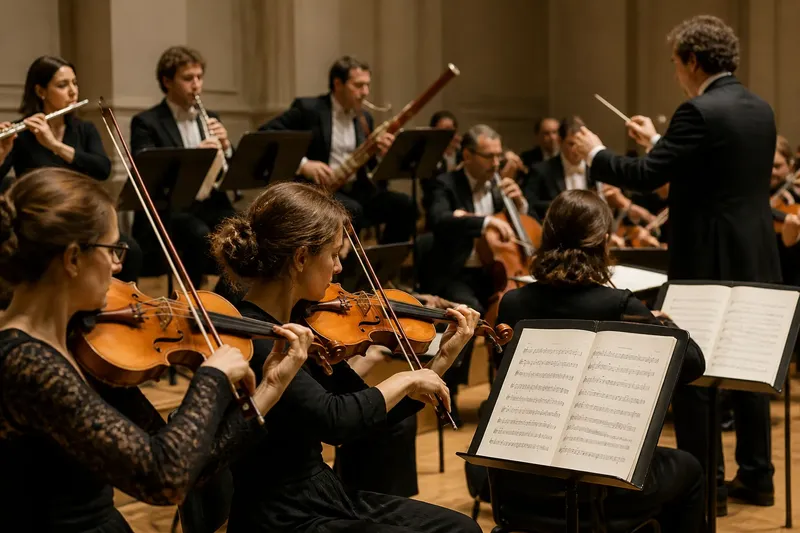
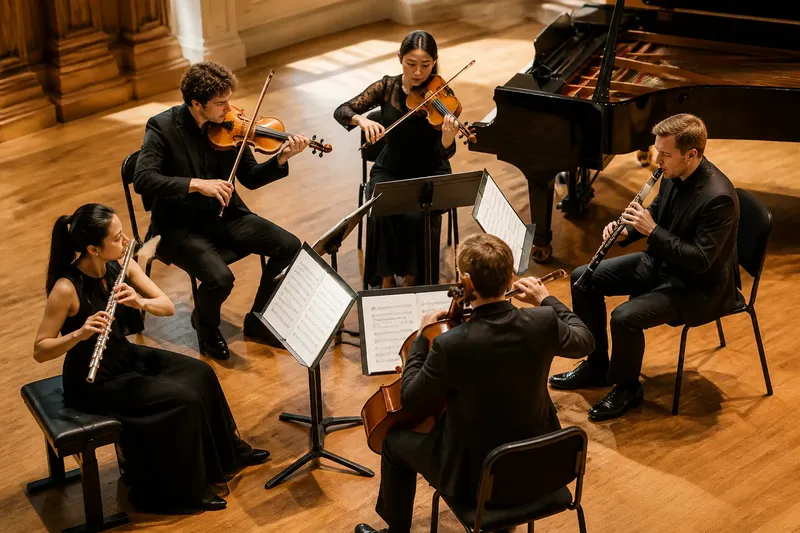
The most common mistake in ensemble listening is trying to follow every instrument at once. The cost is a blur: you hear that a passage is busy but lose its shape. Strings first or winds first gives you a manageable starting point. Follow one group, then listen for how the groups exchange ideas.
This approach helps when the score is unfamiliar or the texture is dense. You do not need to identify every instrument. Choose a sound you can recognize, notice what it does, and let the other parts become a backdrop. If that anchor stops helping, switch to the handoffs between players.
Choose a starting group
Strings often provide a continuous thread. Violins, violas, cellos, and basses may sustain a figure, repeat a rhythm, or carry a melody as other groups enter and leave.
Winds often make changes in the texture easier to notice. A flute may emerge above the strings; an oboe or clarinet may take up a phrase; brass may add weight or mark a turn. These entrances can act as signposts, though a wind part may disappear again quickly.
Pick the group whose sound you can distinguish from your seat. If the upper strings merge into a bright wash, try a cello line or a clear wind voice. You are choosing a listening anchor, not declaring which section matters more.
- If a repeated figure seems to hold the passage together, try following the strings; if it remains hard to separate, switch to a distinct wind entrance.
- If distinct entrances keep catching your ear, follow the winds; if they vanish between phrases, use the strings as a steadier anchor.
- If high notes feel crowded or sharp, choose a lower-register line; if that line is masked, return to a clearer upper voice.
- If quick notes are difficult to separate, follow a sustained line; if no sustained line stands out, listen for a repeated rhythm instead.
- If your chosen group disappears, wait for its next entry or switch to another audible group; do not spend the passage searching through the loudest sound.
- If the texture changes and a different section becomes clearer, shift your attention at that boundary; if the change is gradual, stay with your current line until a new phrase begins.
Follow a disappearing line
A part can be hard to follow even when it remains musically important. It may share a register or rhythm with another part, or be covered by a fuller sound. The part may also consist of brief entries separated by rests rather than one continuous line.
Do not treat every missed note as a listening failure. Ask what the line does across a longer span. Does it return with a recognizable pitch or rhythm? Does it move while another group holds a note? A broad contour is often easier to hear than each individual sound.
Imagine you choose the violas during quick upper-string motion, then lose them as the full ensemble grows louder. Wait for a change in the texture instead of hunting through the loudest moment. When the sound thins, listen for the violas’ lower-register motion and follow it into the next entry. You may miss notes in the dense passage, but the returning pattern can make the line’s place in the texture easier to hear.
Seating can affect what reaches you. A line may be clearer from one part of the hall than another, and room reflections can soften the attack of certain sounds. You do not need to diagnose the acoustics: switch to a more audible line, or listen for the part’s next entrance rather than forcing attention onto a sound you cannot separate.
Separate section layers
Following a section can make its members seem like one instrument. That impression can be useful when they move together, but it may hide differences in articulation, register, and role. A violin section may carry a melody while another string group sustains a quieter layer; both belong to the strings, yet they do different jobs.
Narrow your attention within the group. With strings, listen for a long held note against a repeated figure, or a high line against a lower one. With winds, distinguish the player who starts a phrase from those who answer or support it. You can hear these distinctions without naming every instrument correctly.
If you hear only a mass of sound, listen at its edges: a new attack, a note that continues after others stop, or a phrase that rises while the rest settles. These details can reveal several layers inside what first sounded like one block.
Not worth the effort: trying to identify every player, instrument, and entrance in real time. That turns listening into a running inventory. A few well-chosen details give you a more useful picture of the ensemble.
Hear the handoffs
Once you can stay with one group, listen for how groups interact. A phrase may pass from a wind instrument to the strings, overlap between them, or break into short replies. Following only one section can make its part clear while leaving the musical conversation unheard.
For a short stretch, listen for one relationship. Pick a phrase, rhythm, or sustained note, then ask which group seems to answer it. Notice whether the answer copies the idea, changes its shape, or interrupts it. You are attending to an audible connection, not deciding what the composer intended.
Pay attention to the gap between entries. A wind phrase may end just before the strings continue its rhythm, or strings may hold a note while a wind voice adds a new shape above it. The gap can make the exchange easier to hear than the loudest part of either entrance.
If the exchange still sounds crowded, follow the change rather than its source. Does the texture become more sustained, more rhythmic, lighter, or denser? Then listen for which group seems to bring about that change. This keeps the focus on the relationship without requiring perfect instrument recognition.
Questions about ensemble listening?
Should I follow strings or winds first?
Choose the group that stands out most clearly in the passage. Strings can offer a continuous thread, while wind entrances may provide distinct landmarks; either is a useful starting point.
What if I cannot name the instrument?
Describe the sound by its role or quality: high, low, sustained, repeated, or newly entering. Accurate instrument names can enrich listening, but they are not required to follow a musical line.
How do I hear a handoff?
Listen for a phrase or rhythm that continues after a change in tone or register. The second group may repeat it, reshape it, or answer with a contrasting idea.
When should I switch groups?
Switch when your current anchor becomes difficult to hear or a new entrance draws your attention. Moving to another group helps you hear a different layer; it does not mean you have lost the thread.
Switch at clear boundaries
Moving between sections works best when you keep one small question in mind. After following strings, ask what the winds add; after following winds, ask what the strings keep going. That question gives your attention a place to land without requiring you to monitor every part.
You can also shift focus at a clear musical boundary: a pause, a change in texture, or the start of a new phrase. A gradual transition is harder to follow if you keep changing targets in the middle of a busy passage. Wait for the sound to open up, then choose the next group.
Strings first may reveal continuity, pulse, or a line that persists beneath the surface. Winds first may reveal entrances, contrasts, or a phrase passing between players. Listening across the ensemble brings those observations together without erasing the value of either starting point.
For strings first or winds first, choose the approach that lets you hear a clear next event: a held tone, a new entrance, or an answer from another section. Follow that event long enough to notice what changes, then decide where your attention should go next.