How Concert Hall Acoustics Change What You Hear
Concert hall acoustics can make music seem clear, blended, or distant. Learn what to listen for, how seats affect the sound, and what to do if details blur.
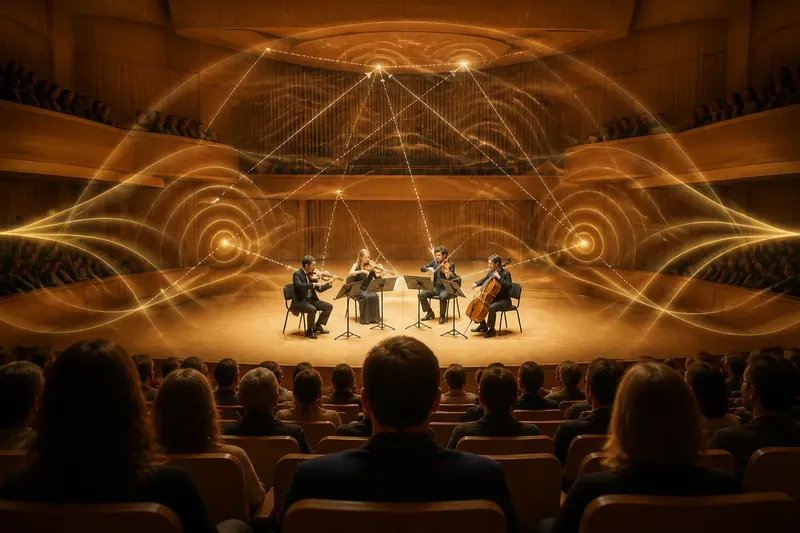
The most common mistake when judging concert hall acoustics is blaming yourself when a line sounds blurred or distant. That can make a first concert feel like a listening test, when the room may be shaping what reaches your seat. Concert hall acoustics affect clarity, blend, and the sense of distance, so listen for those qualities before deciding that you missed something.
What the room changes
Sound reaches you directly from the performers and indirectly after reflecting off the stage, walls, ceiling, and other surfaces. Those reflections help create a sense of space. If reflected sound lingers or overlaps heavily with new notes, quick details may be harder to separate. A room with less lingering sound may make attacks and rhythms seem more distinct.
Neither quality is automatically better. A lingering sound can help sustained notes feel joined, while a drier sound can make rapid passages easier to parse. The same room may suit one passage and complicate another.
Clarity and reverberation
Clarity is your ability to distinguish musical details, such as a sharply articulated rhythm or a line beneath the main melody. Reverberation is the continuation of sound after the player stops or changes notes. Listen for the tail of a held note, then notice whether the next sound seems separate or partly joined to it.
Do not confuse reverberation with an instrument simply playing a long note. A useful clue is what happens after a short, abrupt sound: if its tone seems to hang in the room, reflections are contributing to what you hear.
Seat and sound
Your seat changes the balance of direct and reflected sound. A position close to the stage may make individual attacks feel prominent. Farther back, the combined sound may seem more blended. Side positions, balconies, and areas beneath overhangs can also present a different balance, though the result depends on the hall and the stage layout.
Before buying or requesting a seat, check the venue’s seating map and accessibility information. If the venue offers seating guidance, ask staff about locations that suit your needs. No seating label can promise exactly how the music will sound to you.
- If a melody is clear but the accompaniment is hard to distinguish, then listen for the balance from your seat; if it remains obscured, use a future visit to ask the venue about another area.
- If notes seem to linger after short sounds, then notice whether quick passages blur; if they do, focus on broader rhythms instead of individual attacks.
- If a passage sounds unusually dry, then listen for how sustained notes connect; if the texture feels detached, attend to phrasing and pauses.
- If one side of the ensemble seems much louder, then check whether your seat is off-center; if the balance distracts you, ask the venue about seat options next time.
- If voices or instruments become hard to separate during dense music, then follow the overall shape of the passage; if it clears in a quieter section, compare the two textures.
- If a balcony or overhang changes the sense of distance, then note whether the sound feels less direct; if that is uncomfortable, consult the venue about alternative seating.
Concert hall acoustics?
Why does music sound blurry?
Reflected sound can overlap with later notes, making quick details harder to separate. Dense playing can add to that effect, so notice whether the blur eases when the texture thins.
Can a seat change the sound?
Yes. Your position affects how much direct sound and reflected sound reaches you, as well as the apparent balance among performers. Check the venue’s seating information rather than assuming that one area suits every listener.
Is more reverberation always better?
No. Lingering sound can join sustained tones, but it can also soften the edges of rapid notes. Listen for the quality that helps you follow the passage in front of you.
What should I do if I cannot hear a part?
Try listening to the texture as a whole rather than straining to isolate one instrument. If the issue is persistent and affects your access to the performance, contact the venue about available seating or accommodations.
A worked listening example
Imagine you are seated in the middle of a hall for a string quartet. At the start, a short, clipped figure is easy to hear, but the next notes seem to overlap with it. You listen for the sound’s tail and notice that it lingers after the players move on.
During a quieter passage, the instruments separate more clearly. You compare the two moments and decide that the room’s lingering sound makes the busy section harder to follow, while the quieter section remains distinct. Rather than trying to identify every line, you listen to the clipped rhythm in the busy passage and to the separate entries in the quiet one. The resulting choice is to follow broad rhythmic shape when the texture is dense and finer detail when the sound opens up.
What not to chase
It is not worth trying to diagnose a hall from one seat or to label every reflection as a flaw. A concert room, the performers, the music, and your position all contribute to the sound you hear. Attend to the audible result and let the venue handle technical questions about the room.
Concert hall acoustics become easier to notice when you compare a short, crisp sound with a sustained one, or a dense passage with a sparse one. On your next visit, use that simple contrast to decide whether the room is helping details stand apart or drawing them together.